Why Forecast Accuracy Is Not Enough for Faster Demand Planning
A forecast can be right and still arrive too late to matter.
That is the uncomfortable truth in many supply chains. Companies invest in better models, cleaner history, richer statistical methods, and more skilled planners. Those investments matter. A poor forecast creates noise, waste, and confusion.
But forecast accuracy is only part of the performance equation. The bigger question is often simpler: how long does it take the organization to act once demand changes?
If a retailer shifts an order, a key account accelerates buying, a supplier misses a shipment, or inventory starts draining faster than expected, the business needs more than a better prediction. It needs a faster path from signal to decision to execution.
That gap is demand planning latency.

Demand planning latency slows down even accurate forecasts
Demand planning latency is the time it takes for a demand signal to become an operational action. It is the full signal-to-action time.
That signal might come from:
A spike in sell-through
A large customer order
A delayed supplier shipment
A promotion performing better than expected
A transportation disruption
A change in inventory position
A shift in sales pipeline confidence
The action might be:
Reallocating stock
Adjusting production
Changing purchase orders
Expediting a shipment
Updating safety stock
Reprioritizing customers
Changing the forecast and plan
Forecast accuracy measures how close the plan is to actual demand. Decision latency measures how quickly the organization responds when reality changes.
Those are very different problems.
A company can have a strong forecast accuracy score and still be slow. The model may detect the demand shift, but the team may not review it until the next planning cycle. A planner may notice the issue, but approval may take several days. Operations may agree with the change, but suppliers and logistics partners may not receive the update soon enough.
By the time the decision reaches execution, the cost has already appeared somewhere else in the system.
That is why faster demand planning requires looking beyond the forecast model. The planning process, decision rights, data connections, and execution handoffs all matter.
Latency hides in the normal planning process
Demand planning latency rarely looks like one obvious bottleneck. It usually hides in familiar routines that feel normal because they have been in place for years.
Manual data consolidation delays the first signal
Many planning teams still spend a large part of the cycle gathering and cleaning data. They pull files from ERP, sales systems, spreadsheets, customer portals, inventory reports, and supplier updates.
By the time the data is ready, the signal may already be old.
Manual work also creates variation. One planner may handle exceptions one way. Another may use a different spreadsheet or judgment process. That makes it harder to separate real demand changes from data noise.
Monthly planning cycles slow the response
Monthly S&OP or integrated business planning cycles provide discipline, but they can also create delay. A demand shift that appears in the first week of the month may not receive full attention until the next formal review.
That rhythm works for stable, predictable categories. It fails when demand patterns change faster than the calendar.
High-volume items, constrained materials, seasonal products, and volatile channels often need more frequent monitoring. Waiting for the next cycle can turn a small imbalance into a costly operational problem.
Customer signals remain disconnected
Customer behavior often changes before the formal forecast changes. Sell-through, point-of-sale data, distributor inventory, quote activity, order patterns, and field sales updates can all show early warning signs.
The problem is access. Those signals may sit outside the planning system. They may arrive in emails, portals, spreadsheets, or sales notes. If planners cannot see them together, they cannot act with confidence.
Too many exceptions bury the real issues
Planners do not need more alerts. They need better prioritization.
When every item, region, or customer generates an exception, the team spends time sorting noise. The most urgent issues compete with minor variances. People chase small forecast misses while large financial risks build elsewhere.
A low-latency process must separate routine variation from decisions that truly need attention.
Slow approvals create decision queues
Some organizations can identify the right action quickly, then lose days waiting for approval.
A forecast change may require signoff from sales, finance, operations, or supply planning. A purchase order change may need management approval. A customer allocation decision may trigger a long internal debate.
Governance matters, but unclear decision rights slow everything down. If no one knows who can approve which action, decisions pile up.
Planning is disconnected from execution
The final delay often appears after the decision. Planning updates the forecast, but execution teams still work from old production schedules, supplier commitments, or transportation plans.
Demand planning only creates value when it changes what happens in the physical supply chain. If the plan does not connect to purchasing, manufacturing, inventory deployment, and logistics, the business remains slow.

Slow decisions create real business costs
Latency is not just a planning metric. It shows up in financial and customer outcomes.
When decisions move slowly, the business often pays in several ways at once.
Excess inventory
A demand drop may appear in the data, but if purchasing and production continue on the old plan, inventory builds. The result is more storage cost, more obsolescence risk, and more cash tied up in stock that is not moving.
Stockouts
When demand rises faster than expected, a slow response can drain available inventory before supply catches up. Even a good forecast cannot protect service levels if the team notices the issue too late.
Expedites and premium freight
Late decisions often become urgent shipments. The team pays more to move goods faster because it missed the window to adjust earlier.
Lost sales
If inventory is unavailable when customers need it, the sale may disappear. In some markets, the customer waits. In others, they switch suppliers.
Trapped working capital
Slow planning creates buffers. Teams hold extra inventory because they do not trust the organization to react quickly. That inventory becomes a substitute for responsiveness.
The pattern is common. A company improves forecast accuracy, but still carries too much inventory. Service issues continue. Expedited freight remains high. Planners stay busy fighting exceptions.
The forecast got better, but the operating system stayed slow.
AI can shorten the path from signal to action
AI can help, but only when it targets the full planning cycle. Many teams focus first on how to improve forecast accuracy with AI. That is a valid goal, but the larger opportunity is reducing latency across the process.
AI demand forecasting can estimate future demand using more signals and more pattern recognition than traditional methods. Yet the same technology can also help teams act faster after the forecast changes.
Aggregate demand signals
AI can bring together large volumes of data from different sources, including orders, shipments, inventory, customer activity, market signals, supplier updates, and logistics events.
The value is not simply having more data. The value is seeing related signals in one place, close to when they happen.
For example, a rise in customer orders may look manageable on its own. Paired with low regional inventory and a supplier delay, it becomes urgent.
Detect exceptions faster
AI can monitor demand, inventory, and supply conditions continuously. Instead of waiting for the next review, the system can flag meaningful changes as they appear.
Good exception management should answer three questions:
What changed?
Why does it matter?
What action should receive attention first?
That helps planners spend less time finding problems and more time solving them.
Identify patterns across products and channels
Demand does not change in isolation. A promotion in one channel may affect another. A shortage in one product may shift demand to a substitute. A regional weather event may affect store traffic and replenishment.
AI can detect patterns that are hard to see in spreadsheets, especially across large item-location combinations.
Generate scenarios for faster decisions
When conditions shift, planners often need to compare options quickly.
AI can help create scenarios such as:
Raising the forecast for a high-priority customer
Reallocating available inventory across regions
Pulling production forward
Delaying low-priority replenishment
Testing the impact of supplier constraints
The point is not to remove judgment. The point is to reduce the time required to understand tradeoffs.
Prioritize planner attention
Not every exception deserves the same response. A small forecast miss on a noncritical item may not matter. A moderate demand shift on a constrained product could create a major service risk.
AI can rank issues based on business impact, such as revenue exposure, margin, customer priority, inventory risk, or supply constraint.
Automate repetitive workflows
Some planning actions follow clear rules. If inventory drops below a threshold and demand rises, the system can create a recommended replenishment action. If a forecast change stays within an approved range, it may not need a long approval chain.
Automation works best when it handles repeatable analysis and routing, while planners handle judgment-heavy decisions.

Faster demand planning moves from forecasts to demand sensing
Traditional forecasting often works in batches. Teams gather data, run the model, review exceptions, reconcile functions, approve the plan, then pass it to execution.
Demand sensing works differently. It connects customer, sales, inventory, supplier, and logistics signals so the organization can monitor demand as it changes.
That does not mean every signal requires immediate action. Many changes are noise. The goal is to detect the few changes that matter early enough to respond.
A lower-latency model follows a simple rhythm.
Sense
The system captures demand and supply signals as close to real time as practical. This may include orders, shipments, inventory, sell-through, production status, supplier confirmations, and transportation events.
Prioritize
The system filters exceptions by business impact. It separates noise from issues that could affect service, inventory, cost, or revenue.
Decide
Planners review recommended actions and scenarios. Decision rights are clear, so routine changes move quickly and complex tradeoffs go to the right people.
Execute
The decision flows into purchasing, production, deployment, and logistics. Execution teams see the current plan, not a stale version from the last cycle.
Learn
The system tracks outcomes. Did the action improve service? Did it reduce excess stock? Did the exception matter? Over time, the planning process gets faster and more precise.
This cycle turns demand planning into continuous monitoring without turning every day into a full planning meeting.
Reducing latency starts with the process, not the model
Better technology helps, but a slow process will weaken any tool. Reducing demand planning latency starts by mapping how decisions actually happen.
Map the current planning process
Follow a real demand signal from start to finish. Pick a recent example, such as a demand spike, a stockout risk, or a customer order change.
Trace each step:
When did the signal first appear?
Who saw it first?
Where was it recorded?
When did planning review it?
Who approved the decision?
When did execution receive the update?
When did the physical action happen?
This exposes the real cycle time, not the planned cycle time.
Identify waiting time
Most delays are waiting periods, not work periods. Data waits to be consolidated. Exceptions wait for review. Decisions wait for approval. Execution waits for updated instructions.
Reducing waiting time can deliver more value than making each task slightly faster.
Connect the right data
Do not connect every possible data source at once. Start with the signals most tied to business risk.
For many companies, that means linking:
Customer orders and forecasts
Inventory by location
Open supply and purchase orders
Production capacity or constraints
Shipment status
Sales input for major accounts
Supplier confirmations
The goal is a shared view of demand, supply, and inventory.
Automate repetitive analysis
Planners should not spend hours comparing spreadsheets to find known patterns. Automate checks for common conditions, such as sudden order spikes, late supply, fast inventory depletion, and large forecast changes.
This gives planners more time for judgment, negotiation, and scenario review.
Clarify decision rights
Fast planning requires clear boundaries.
Define which changes planners can make directly, which require cross-functional review, and which need executive approval. Set thresholds based on financial impact, customer priority, supply risk, or inventory value.
When decision rights are clear, teams move with confidence.
Connect planning to execution
A decision is not complete when a forecast changes. It is complete when the right operational action starts.
That means planning systems need strong handoffs to:
Procurement
Manufacturing
Inventory deployment
Warehouse operations
Transportation planning
Supplier collaboration
Customer service
Execution feedback should also flow back into planning. If a supplier cannot confirm supply or a carrier misses pickup, the demand plan must reflect that reality quickly.
Forecast accuracy is only one measure of planning health
Forecast accuracy still matters. It gives the business a better starting point. But it should sit beside speed, bias, inventory, service, and execution metrics.
Metric | What it shows | Why it matters |
Forecast accuracy | How close the forecast was to actual demand | Measures prediction quality |
Forecast bias | Whether forecasts tend to run high or low | Reveals systematic overplanning or underplanning |
Inventory turns | How quickly inventory moves | Shows whether stock supports real demand |
Service level | How often demand is fulfilled as promised | Connects planning to customer outcomes |
Excess inventory | Stock beyond useful demand | Measures cash and obsolescence risk |
Signal-to-decision time | Time from demand signal to approved decision | Shows planning response speed |
Decision-to-execution time | Time from decision to operational action | Shows whether planning reaches the supply chain |
The last two metrics are especially useful because they show whether the organization can react. If those times remain long, forecast accuracy gains may not translate into better performance.
A low-latency demand planning model usually has several traits:
Real-time or near-real-time signals for key products and customers
AI-driven exception management that ranks issues by impact
Faster planner decisions supported by clear scenarios
Clear approval thresholds
Connected supplier and logistics execution
Feedback from execution back into planning
Metrics that track both prediction and response time
This model does not require every company to operate in real time across every item. That would create noise and cost. It means the business knows which signals matter, watches them closely, and acts before delays become expensive.
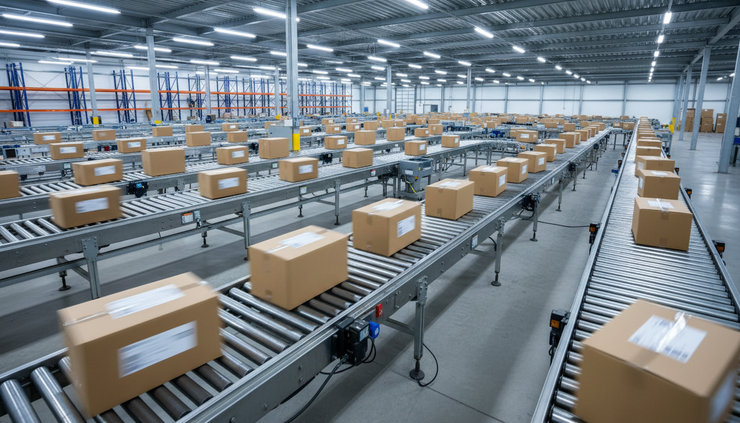
A better forecast needs a faster operating system
A more accurate forecast predicts what may happen. A faster planning operating system helps the business act before it is too late.
That is the real shift. Demand planning teams should keep improving forecast quality, but they should also measure and reduce the time between signal, decision, and execution.
Start with one product family, one region, or one high-priority customer segment. Map the process. Find the waiting time. Connect the signals that matter. Automate routine analysis. Clarify who can decide. Make sure planning changes reach suppliers, warehouses, production, and logistics quickly.
The companies that win will not be the ones with the best forecast on paper. They will be the ones that sense change early, make clear decisions fast, and turn those decisions into action while there is still time to shape the outcome.


Comments